
A breath of fresh air: Ventilation and the future of healthy homes
Condensation and Mould in UK Homes: The Evolving Challenge for Social Housing
Condensation and mould have long been a challenge in UK homes, particularly within the social housing sector. As homes have been upgraded to be more energy efficient and airtight, the risk of excess moisture builds – often with serious consequences.
Mould isn’t just unsightly; it poses real risks to both health and property. Moisture in the home is inevitable. When four people live in a three-bedroom home, they can generate over 112 pints of moisture every week through everyday activities like cooking, washing and even breathing.
But without sufficient ventilation, that moisture can lead to persistent condensation – which in turn creates the ideal conditions for mould to thrive. With one in five UK homes affected by damp or mould-related issues, now more than ever, ventilation is a crucial part of the conversation.
The Socioeconomic Climate
Covid-19 has increased consumer awareness of the impact of poor indoor air quality (IAQ) and the health risks of condensation and mould. Residents are more informed and more likely to challenge poor living conditions – and social landlords must be prepared to respond.
This has heightened the need for robust ventilation solutions that help combat high levels of moisture and improve IAQ.
The cost-of-living crisis has also challenged social landlords, as there is a direct relationship between temperature and relative humidity. Every 1°C change in temperature can lead to a 5% increase or decrease in relative humidity. With increasing energy costs, maintaining the right indoor balance has become even more complex.
The Regulatory Landscape Has Shifted
The Homes (Fitness for Human Habitation) Act 2018, driven by former Westminster MP Karen Buck, brought significant change by requiring landlords in both the private and social sectors to offer properties free from issues such as leaks, poor heating, damp and mould.
In recent years, there have been major shifts in regulation and public expectation around housing conditions – and rightly so.
The 2022 updates to Approved Document F of the Building Regulations significantly raised whole-dwelling ventilation requirements and introduced a stipulation that every habitable room must include background ventilation, regardless of air permeability.
Alongside this, Approved Document L and the forthcoming Future Homes and Buildings Standard are tightening energy efficiency targets. Due to take effect later this year, the new standard will require new homes to cut carbon emissions by 75%, increasing the need for sophisticated, low-energy ventilation solutions.
Ventilation is now legally classed as a “controlled service”, meaning it must be installed by a competent person and is considered notifiable work. Housing providers must ensure contractors are properly trained and registered under third-party Competent Person Schemes.
In the wake of the Awaab Ishak tragedy, the introduction of Awaab’s Law (coming into force in October this year) will mandate that damp and mould issues in social housing are investigated and resolved within fixed timeframes – putting the onus firmly on providers to act quickly and effectively.
These changes, combined with the critical Housing Ombudsman report (2021), have triggered a much more proactive approach from the sector – and a realisation that prevention is not just preferable, but essential.
Seven Practical Solutions and Training to Meet Evolving Standards
1. Supporting Competency Across the Sector
Meeting these new standards means developing the skills needed to deliver high-quality installations.
The NICEIC Domestic Ventilation Course provides contractors and installers with the means to meet this requirement.
Typically, this two-day course provides both practical and theoretical training in system installation, commissioning and compliance. It’s the recognised route to joining a Competent Person Scheme across England, Wales, Scotland, and Northern Ireland.
2. Continuous Running Centralised & Decentralised Extract Ventilation
A popular choice for bathrooms, kitchens and WCs in recent years has been a shift from intermittent fans to continuous running extract systems.
These can be either whole-house (centralised) or decentralised systems with fans located in individual wet rooms.
When specifying a product, consider:
- Ease of maintenance
- Energy efficiency
- Length of warranty
- Boost and trickle rates
- Built-in data logging capabilities
3. Explore Positive Input Ventilation (PIV) Solutions
For whole-house solutions, Positive Input Ventilation (PIV) is ideal – especially in properties where major renovation isn’t viable.
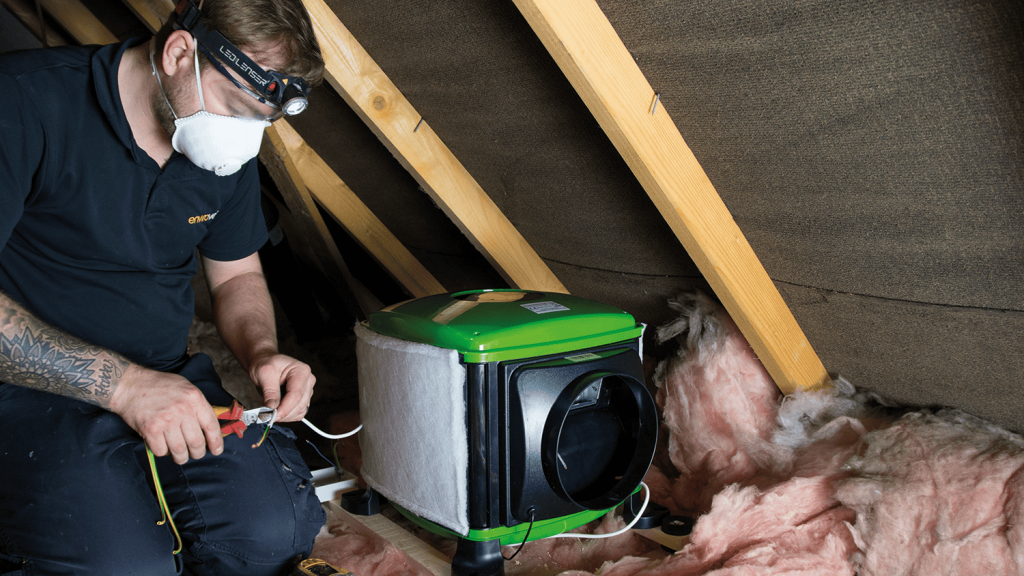
Typically installed in the loft, PIV systems introduce filtered, fresh air throughout the home, diluting pollutants and displacing moisture-laden air.
This reduces condensation and prevents mould from gaining a foothold – creating healthier, safer living environments.
4. Mechanical Ventilation with Heat Recovery (MVHR)
For new builds and some retrofit projects, Mechanical Ventilation with Heat Recovery (MVHR) is an excellent solution to improve indoor air quality, recover lost heat and support a whole-house ventilation system.
MVHR systems can recover 73% to 95% of the heat from exhaust air, improving energy efficiency and contributing to SAP ratings.
They are an essential component in energy-efficient home design and provide residents with an effective way to combat condensation and mould.
5. Remote Environmental Data Logging
With new regulatory requirements and the introduction of Awaab’s Law, there is a growing need for remote environmental data logging.
These systems provide real-time data on relative humidity and temperature, allowing landlords to monitor conditions across housing stock.
Linked with other building performance data, this helps to:
- Proactively identify potential issues
- Support disrepair case management
- Encourage resident behavioural changes
- Improve transparency and reporting
6. Design Support for Social Housing Providers
One size doesn’t fit all when it comes to ventilation systems.
Specialist ventilation design services provide detailed technical drawings and support compliance with SAP assessments, Passivhaus methodology, and the latest Building Regulations.
This ensures landlords and contractors are compliant and achieve the most appropriate, efficient system for each specific property type.
7. Choosing the Right Partner in Ventilation
The landscape for social landlords is changing rapidly – with tighter regulations, increased legal scrutiny, and higher resident expectations.
But with the right strategy and partner, housing providers can turn this challenge into an opportunity to:
- Improve property performance
- Reduce complaints
- Enhance resident safety and engagement
With thanks to James Kane, Head of Social Housing Sales at EnviroVent, an awarded supplier on the PfH Responsive Repairs and Void Works DPS.
Learn more about PfH’s Integrated Traditional Build and MMC Framework here